






 https://www.3keel.com/wp-content/uploads/2025/12/deforestation_sf.webp
200
360
Anna Kitulagoda
https://www.3keel.com/wp-content/uploads/2023/04/3keel_logo-1.png
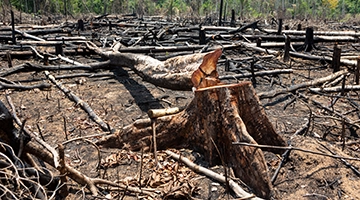
Anna Kitulagoda2025-12-11 09:49:342025-12-11 12:07:17EUDR delayed: 3Keel urges focus on ending deforestation
https://www.3keel.com/wp-content/uploads/2025/12/deforestation_sf.webp
200
360
Anna Kitulagoda
https://www.3keel.com/wp-content/uploads/2023/04/3keel_logo-1.png
Anna Kitulagoda2025-12-11 09:49:342025-12-11 12:07:17EUDR delayed: 3Keel urges focus on ending deforestationCASE STUDY WWF
Addressing the conversion of natural ecosystems beyond forests in proposed EU regulation
3Keel’s evidence-based report for WWF France demonstrated that a wide range of natural ecosystems – not just forests – should be protected from conversion in the EU’s proposed regulation of agricultural commodity imports.
O
n 17 November 2021, the European Commission presented a proposal for a regulation on deforestation-free products, requiring companies to conduct due diligence to ensure that certain products placed on the EU market are not driving deforestation. This laid the groundwork for the EU Deforestation Regulation.
The proposal did not address the conversion of natural ecosystems beyond forests, such as grasslands, savannah, mangroves and peatland. A review is proposed two years after the law enters into force, which would assess whether other ecosystems and commodities should be included.
In summer 2021, WWF commissioned 3Keel to undertake research to bring together disparate pieces of information and insight to raise wider awareness and build the case for the inclusion of these ecosystems in the regulation.
The report presented the evidence for why the EU should seek to address the conversion of other ecosystems from the outset because they provide essential services, yet are already suffering conversion rates as high, or higher than, those of forests.
Our research and analysis showed that non-forest ecosystems:
- are among the most threatened – yet least protected – in the world;
- hold great biological diversity;
- are crucial for mitigating climate change; and
- provide significant value to indigenous peoples and local communities (IPLCs).
In addition to the primary research on the ecosystems themselves, we also provided a series of case studies to illustrate how the EU contributes to global ecosystem loss via its commodity imports from biomes from all over the world.
For example, considering just direct commodity imports (but not those embedded as ingredients, which would significantly increase the proportion), 26% of the EU’s beef imports are from the Cerrado in Brazil where cattle farming is a significant driver of the loss of grasslands and savannahs.
To help aid in the understanding of these critical ecosystems, the value they have, and the respective connections to the EU, we produced a series of infographics (see right).
Ultimately, the research demonstrated that it is feasible to include non-forest ecosystems in the proposed regulation by bringing together some of the many tools and processes already in use, which could be developed to enable companies to implement those requirements.
More case studies you may be interested in
https://www.3keel.com/wp-content/uploads/2025/12/deforestation_sf.webp
200
360
Anna Kitulagoda
https://www.3keel.com/wp-content/uploads/2023/04/3keel_logo-1.png
Anna Kitulagoda2025-12-11 09:49:342025-12-11 12:07:17EUDR delayed: 3Keel urges focus on ending deforestation https://www.3keel.com/wp-content/uploads/2025/11/sf_webinar1.webp
200
360
Carole Scott
https://www.3keel.com/wp-content/uploads/2023/04/3keel_logo-1.png
Carole Scott2025-12-04 11:42:492025-12-04 12:45:32New 3Keel webinar: Addressing deforestation
https://www.3keel.com/wp-content/uploads/2025/11/sf_webinar1.webp
200
360
Carole Scott
https://www.3keel.com/wp-content/uploads/2023/04/3keel_logo-1.png
Carole Scott2025-12-04 11:42:492025-12-04 12:45:32New 3Keel webinar: Addressing deforestation https://www.3keel.com/wp-content/uploads/2025/11/deforestation_paper_2025_sf.webp
200
360
Richard Scott
https://www.3keel.com/wp-content/uploads/2023/04/3keel_logo-1.png
Richard Scott2025-11-13 10:08:012025-12-11 10:30:52Deforestation white paper shows limits of voluntary business action
https://www.3keel.com/wp-content/uploads/2025/11/deforestation_paper_2025_sf.webp
200
360
Richard Scott
https://www.3keel.com/wp-content/uploads/2023/04/3keel_logo-1.png
Richard Scott2025-11-13 10:08:012025-12-11 10:30:52Deforestation white paper shows limits of voluntary business action